Buying Guide
Smart Lock Door Compatibility Guide for Importers and Project Buyers
By GwayLock · Published · Updated
Compare 196, P13, P17, DS01, HP-03 and T1 door-fit requirements. Check panel dimensions, thickness, backset and mortise or rim mounting before samples.
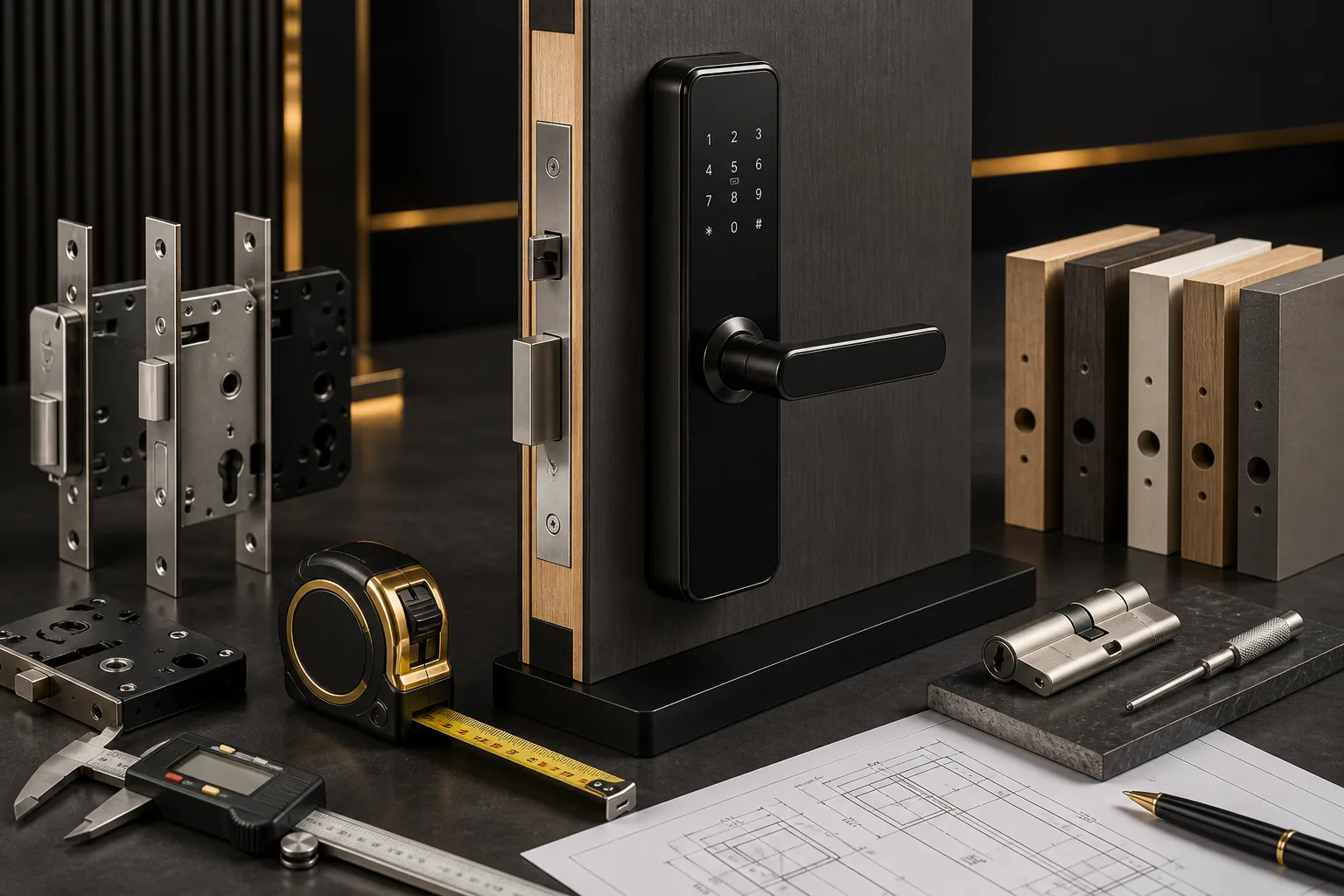
A smart lock fits a door only when the complete installation matches: panel footprint, door thickness, drilling, spindle and lock-body positions, opening direction, strike alignment and frame clearance. A similar product photo or a matching door-thickness range does not establish compatibility.
Start with measured door photographs and a drawing, then compare the current catalogue below. Where a specification says 'Confirm selected version', request the missing drawing before ordering or drilling the door. The product pages link to the public catalogue and, where supplied, the English panel-control and dimension sheets.
Compare door preparation across six catalogue models
The HP-03 and T1 illustrate why outdoor designs must not share one assumed installation specification. HP-03 lists 50–100 mm door thickness but does not publish panel dimensions. T1 has a supplied dimension sheet and a rim-mounted assembly; its door thickness still requires confirmation. For the other models, a 60 / 70 mm latch option does not mean every mortise or existing strike can be reused.
On small screens, swipe across the table to compare all models.
| Model | Format | Panel dimensions | Door thickness | Lock body / door preparation |
|---|---|---|---|---|
| 196 | Handle | Front and rear: 150 × 64 mm (height × width) | 30–50 mm | 60 / 70 mm latch backset options; confirm door preparation |
| P13 | Panel | Front and rear: 181 × 68 mm (height × width) | 35–50 mm | 60 / 70 mm latch backset options; confirm door preparation; 4558 / 5058 / 5085 / 5572 lock-body options; confirm door preparation |
| P17 | Panel | Front and rear: 145 × 70 mm (height × width) | 35–65 mm | 60 / 70 mm latch backset options; confirm door preparation; 4558 / 5058 / 5085 / 5572 lock-body options; confirm door preparation |
| DS01 | Deadbolt | Front: 136 × 65 mm; rear: 140 × 68 mm (height × width) | 35–55 mm | 60 / 70 mm latch backset options; confirm door preparation |
| HP-03 | Fully automatic | Confirm selected version | 50–100 mm | Source-listed options: 6068 square mortise (24 × 240 mm); 6068 cylindrical mortise (30 × 240 mm); 6590 Israel-type lock body (22 × 250 mm); 5572; 6585; 6085; 6068 long lock body (30 × 388 / 40 × 388 mm). Confirm door preparation and included mortise. |
| T1 | Rim-mounted | Front: 450 × 76 × 39 mm; Rear: 435 × 76 × 59 mm (H × W × D) | Confirm selected version | Rim-mounted assembly pictured; confirm included lock body and door preparation |
Send a complete measurement set before sampling
Include a front, rear and door-edge photo, with measurements in millimetres. Show existing holes and hardware rather than only the door surface. Ask for a dimensioned mounting drawing for the exact model and lock-body option, including the rear unit and handle projection.
- Door material, leaf thickness and the flat mounting area available on each face.
- Backset: distance from the door edge to the spindle or cylinder centre, with the measurement points identified.
- Mortise case, faceplate length and width, fixing centres, spindle/cylinder spacing and strike-pocket dimensions.
- Left/right handing, inward/outward opening, frame clearance and any existing multipoint mechanism.
- For outdoor use, describe rain and sun exposure on both sides; request the selected model's operating limits and supporting documents.
Approve the installation on the intended door
Check a complete sample on the intended door construction with the agreed lock body and accessories. Confirm free bolt movement, strike engagement, handle clearance, access from both sides, battery replacement and backup access. Record any drilling or strike changes and approve the installation drawing with the sample. Do not use an image or catalogue outline as a scale drilling template.
Why door compatibility causes complaints
Many complaints happen because the product was selected before the door details were understood. The lock may be too large, the spindle may not fit, the latch may not align, or the door thickness may be outside the recommended range.
- Door thickness does not match the lock structure.
- The existing lock body or mortise size is different from the supplied parts.
- The opening direction was not confirmed before ordering.
- The door frame or strike plate does not align with the latch or bolt.
- The installation hole position does not match the target market door standard.
- A model designed for wooden doors is used on a metal or security door without checking fit.
Door information buyers should provide
A clear door brief makes model selection faster and safer. If the buyer cannot provide full technical drawings, photos and measurements are still useful.
- Door material: wooden, metal, security door, hotel door or glass door if applicable.
- Door thickness range.
- Existing lock body or mortise dimensions.
- Opening direction and handle direction.
- Backset and center distance if known.
- Indoor and outdoor installation environment.
- Project quantity and whether all doors are the same.
Sample installation is essential
For project orders, a sample should be installed on the same type of door before mass production. A tabletop test cannot fully replace a real door installation.
- Check whether all accessories are included.
- Confirm whether the handle moves smoothly after installation.
- Test mechanical key, passcode, fingerprint, card and app functions after installation.
- Check whether the door closes naturally without forcing the latch.
- Record installation steps and update the manual if needed.
How OEM buyers can reduce risk
Door compatibility should be confirmed before packaging artwork and bulk production. If you sell in several markets, you may need different models or accessories for different door standards.
- Do not assume one lock fits every market.
- Prepare a door compatibility table for your sales team.
- Ask the supplier to confirm door thickness and lock body options in writing.
- Use sample feedback to adjust manuals, accessory kits and product descriptions.
- For apartment and hotel projects, test on real project doors before full shipment.
Sources and scope
Product information follows the referenced catalogue pages. Confirm the selected configuration and installation before ordering.
FAQ
Frequently Asked Questions
What door information should smart lock buyers provide?
Buyers should provide door material, door thickness, lock body or mortise size, opening direction, backset if known, installation environment and project quantity.
Why should samples be installed on a real door?
A real door test helps confirm latch alignment, handle movement, lock body fit, opening direction and whether all unlocking methods work after installation.
Can one smart lock model fit every market?
Usually no. Different markets and doors may require different lock bodies, accessories, hole positions or model types.
Explore related smart lock platforms
Review the selection guide and model specifications for each lock type before requesting samples.
Keep reading
Related Articles
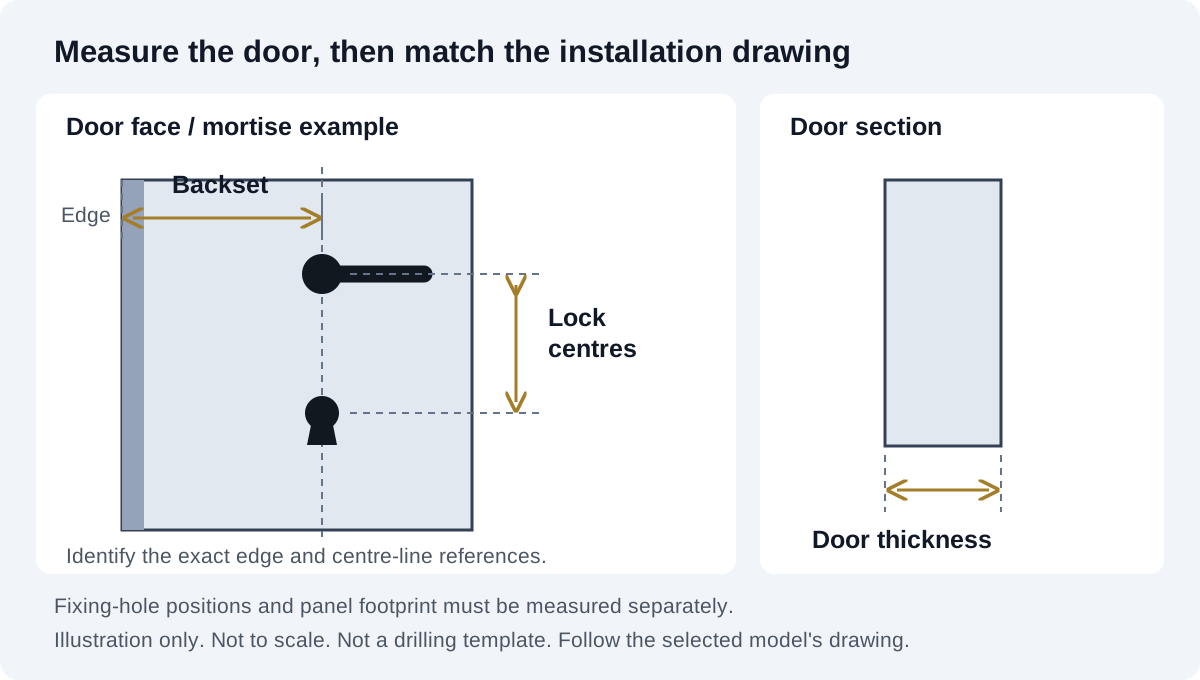
Measure a Door for a Smart Lock: Backset & Centres
Measure door thickness, backset, handle-to-cylinder centres and fixing positions separately. Use the labelled diagram and checklist before requesting a smart-lock sample.
Oct 30, 2026

How Smart Lock Brands Can Reduce After-Sales Complaints Before Production
After-sales complaints can often be reduced before production by improving model selection, sample testing, manuals, packaging and support planning.
Jun 22, 2026
Smart Lock OEM & ODM Guide for Brands and Importers
Plan a smart lock OEM or ODM order with current model comparisons, branding scope, sample approval, QA/QC and a clear quotation record for repeat supply.
Jun 22, 2026
Need supplier support?
Discuss your smart lock OEM/ODM project with GwayLock
Send us your target market, door type, preferred app platform and customization needs. Our team will help you evaluate suitable models and prepare a practical quotation.