Quality Control
Smart Lock Sample Testing Checklist Before Mass Production
Jun 22, 2026
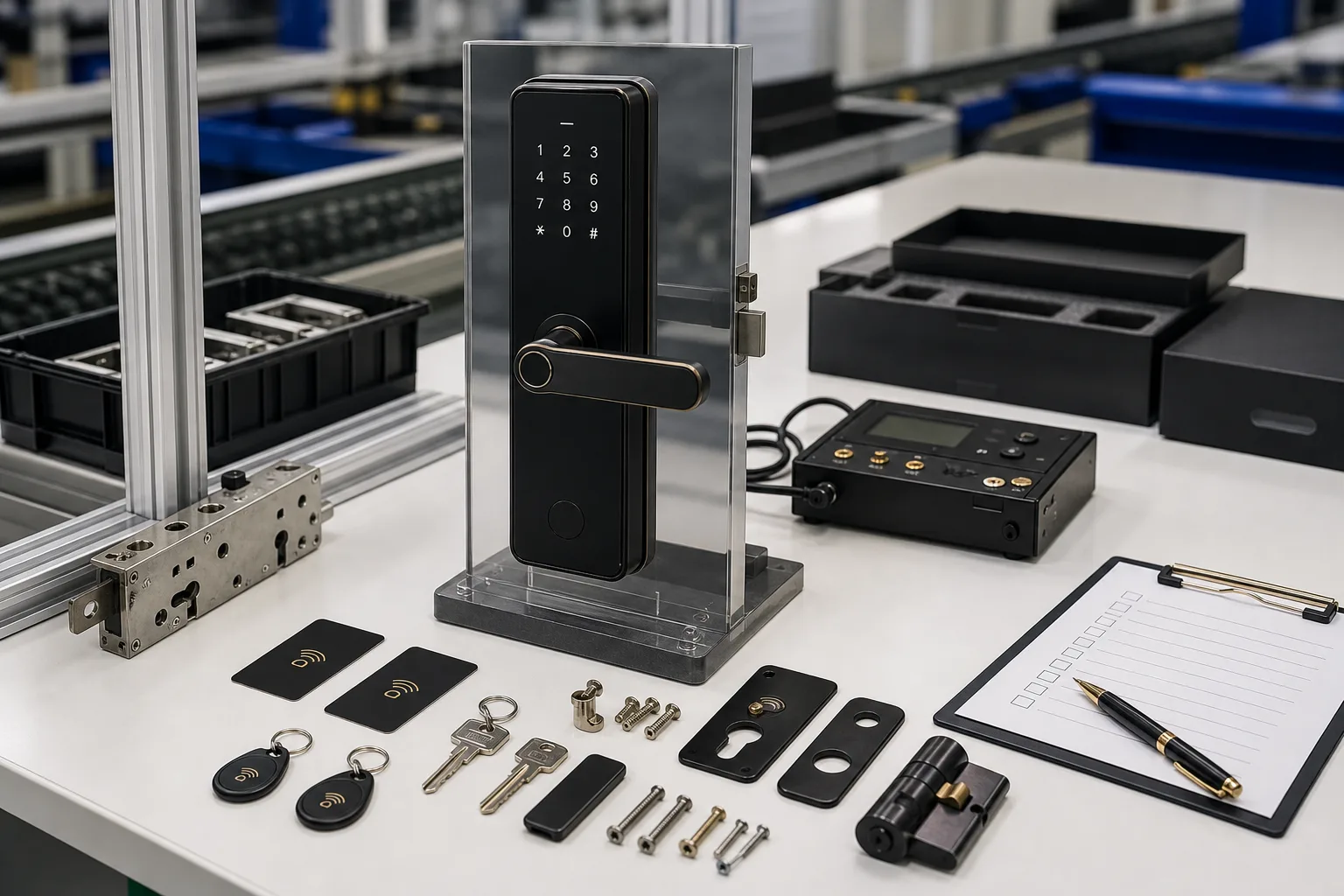
Sample approval is one of the most important steps in a smart lock OEM project. A sample is not only for checking appearance. It should confirm function, installation, app workflow, packaging, documentation and buyer expectations before mass production.
A clear sample testing checklist helps buyers avoid vague feedback and helps suppliers prepare stable repeat orders.
1. Check appearance and materials
Start with basic appearance, but do not stop there. Record sample photos and keep them as part of the approval file.
- Panel finish, color and texture.
- Logo position and quality if customized.
- Screen, keypad, fingerprint area and handle appearance.
- Scratches, gaps, sharp edges or color differences.
- Accessories, screws, cards, keys and lock body condition.
2. Test installation on a real door
Installation testing is essential because many defects appear only after the lock is mounted on a door.
- Door thickness and hole position.
- Opening direction and handle direction.
- Latch, bolt and strike plate alignment.
- Mechanical key operation.
- Smooth locking and unlocking without forcing the door.
3. Test every unlocking method
Every unlock method listed in the quotation should be tested. If one function is not important for your market, clarify whether it should be included in the final model.
- Fingerprint enrollment and recognition.
- Passcode setting, temporary code and anti-peep password if available.
- Card enrollment and card deletion.
- App unlock, remote unlock and gateway behavior if applicable.
- Mechanical key and emergency power access.
4. Test app and reset workflow
App setup problems often create after-sales pressure. Test the full workflow before approving samples.
- Account registration and language support.
- Pairing, unpairing and factory reset.
- User management and permission changes.
- Temporary code, one-time code and schedule settings if available.
- Gateway setup and remote access if required.
5. Review packaging and documents
Packaging and manuals are part of the buyer experience. They should be approved before mass production, not corrected after goods are packed.
- Color box or neutral box design.
- User manual language and installation clarity.
- Product label, carton mark and barcode if needed.
- Accessory layout and missing part prevention.
- Warranty card or after-sales instruction if included.
Conclusion
A smart lock sample should be tested like a complete product system. Buyers should approve appearance, installation, functions, app workflow, packaging and documentation before moving to mass production.
FAQ
Frequently Asked Questions
What should be tested on a smart lock sample?
Buyers should test appearance, installation, unlock methods, app workflow, reset process, battery behavior, packaging, accessories and documentation.
Should sample feedback affect bulk production?
Yes. Sample feedback should be used to confirm model selection, customization, packaging, manuals and inspection standards before mass production.
Is a tabletop sample test enough?
No. A tabletop test is useful, but real-door installation is important for checking door fit, latch movement and practical user experience.
Keep reading
Related Articles
How to Inspect Smart Lock Samples Before Bulk Orders
A sample inspection guide for buyers before confirming bulk smart lock production.
May 18, 2026
Why Smart Lock Battery Life Fails: What B2B Buyers Should Check
Battery complaints can damage a smart lock brand quickly. Learn what importers and distributors should check before sample approval and bulk orders.
Jun 22, 2026
Smart Lock Door Compatibility Guide for Importers and Project Buyers
Door thickness, lock body, opening direction and installation details can decide whether a smart lock project succeeds.
Jun 22, 2026
Need supplier support?
Discuss your smart lock OEM/ODM project with GwayLock
Send us your target market, door type, preferred app platform and customization needs. Our team will help you evaluate suitable models and prepare a practical quotation.
