Buying Guide
Complete Guide to Smart Lock OEM & ODM in 2026
Jun 22, 2026
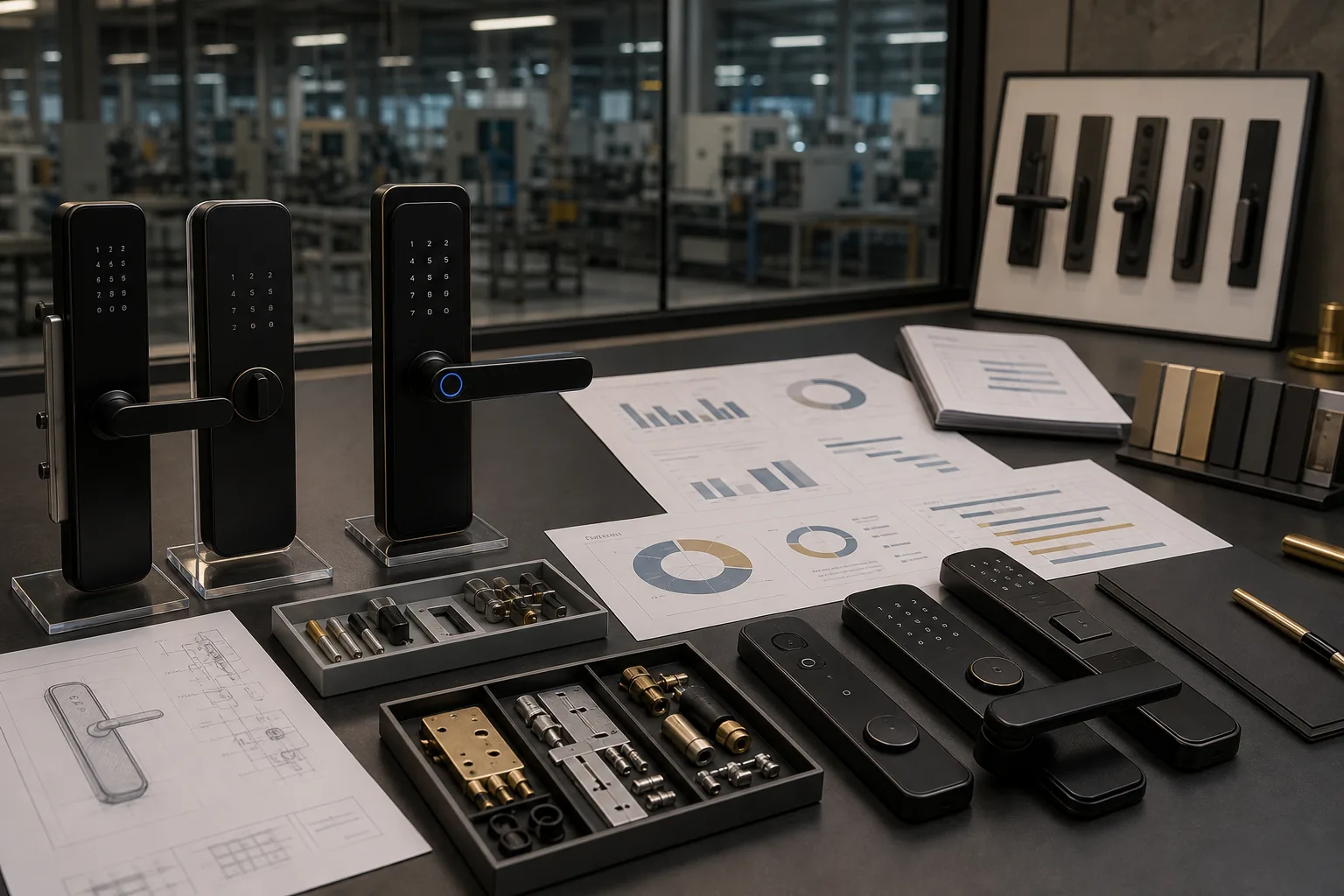
Building a smart lock product line is not the same as buying ordinary hardware. A smart lock combines mechanical structure, electronics, wireless communication, app platforms, firmware, packaging, documentation and after-sales support. For importers, distributors, brands and project buyers, the right OEM or ODM partner can reduce risk before the first bulk order and make repeat orders much easier to manage.
This guide explains the main decisions buyers should understand before starting a smart lock OEM or ODM project in 2026. It covers product types, app platforms, certifications, MOQ, lead time, customization, quality control, packaging and supplier evaluation. The goal is not to push every buyer into a complex custom project. The goal is to help you choose a practical path that fits your market, budget and sales channel.
1. What smart lock OEM and ODM mean
OEM usually means taking an existing smart lock model and adapting it for your brand. The core structure, circuit board, firmware and app compatibility are already available. The buyer may customize logo, panel finish, packaging, labels, manual language or selected accessories. For many importers and distributors, OEM is the fastest and most practical way to launch a smart lock product line.
ODM goes deeper. In an ODM project, the buyer may request a new appearance, special function, structural change, firmware adjustment, new mold or a product concept that is not already available as a standard model. ODM can create stronger differentiation, but it usually requires a clearer specification, higher budget, longer development cycle and higher order commitment.
- Choose OEM when you want to launch quickly with mature models.
- Choose OEM when your main needs are logo, packaging, manual and model selection.
- Consider ODM when you already understand your market and need visible product differentiation.
- Avoid deep ODM at the first step if you have not tested standard samples yet.
2. Start from the business model, not only the lock type
The best smart lock model depends on how you plan to sell, install and support the product. A retail brand, an apartment project buyer and a hotel system buyer may all ask for smart locks, but they need different functions, documents and after-sales support.
- Retail and distributor channels often need clear packaging, simple installation, attractive appearance and broad door compatibility.
- Apartment and rental projects often need passcode management, app access, card options, audit trail options and reliable backup access.
- Hotel projects often need card systems, management software, room-level operation and installer-friendly packaging.
- Smart home resellers often care about Tuya compatibility, Wi-Fi options, app experience and integration with other devices.
- Engineering buyers often focus on project quantity, door information, installation schedule, spare parts and documentation.
3. Main smart lock types for OEM buyers
Before discussing customization, buyers should understand the main product platforms available. A focused product line is usually better than a catalog with too many unrelated models.
- Fingerprint smart locks are suitable for residential, retail and project channels where convenient daily access is important.
- Wi-Fi smart locks are useful when direct remote access is needed, but buyers should check battery life, network setup and app behavior.
- Bluetooth smart locks can work well for local app access, apartment scenarios and models that use a gateway for remote functions.
- Tuya smart locks are often selected by smart home brands and distributors that want a broader ecosystem connection.
- TTLock smart locks are commonly used for apartments, rentals and access management scenarios.
- Hotel card locks are different from ordinary residential locks because they may involve hotel management software, card issuing and project installation.
- Smart deadbolts, lever locks, mortise locks and padlocks should be selected according to target door type and market standard.
4. Key technologies buyers should compare
Smart lock technology should be evaluated from the user's real workflow. A product with many functions is not automatically better. A buyer should check whether the lock is easy to install, easy to set up, stable in daily use and practical for after-sales support.
Unlocking methods usually include fingerprint, passcode, card, app, mechanical key and sometimes face recognition or palm recognition. For most OEM projects, it is better to start with mature and widely tested functions before adding advanced features.
- Fingerprint: test recognition speed, wet or dry finger behavior, user capacity and failure rate during sample evaluation.
- Passcode: check anti-peep password, temporary code, one-time code and reset behavior.
- Card: confirm card type, card issuing process and whether cards are suitable for hotels, apartments or offices.
- App: test account registration, language, pairing steps, user management, gateway setup and support workflow.
- Mechanical key: confirm backup access, key quantity, cylinder position and emergency operation.
- Battery: check battery type, expected battery life, low battery warning and emergency power method.
5. Tuya, TTLock or model-specific app platform
App platform selection is one of the most important early decisions. Tuya and TTLock are widely used, but they are not chosen for exactly the same reason. A model-specific app may also be practical when the buyer wants a simpler function set or a specific product platform.
Buyers should not choose an app only because it is popular. The better question is whether the app fits your target users, sales channel and after-sales capability.
- Tuya is often suitable for smart home ecosystems, multi-device brands and channels that already sell connected home products.
- TTLock is often suitable for apartment, rental and access management scenarios where passcode and user management matter.
- A model-specific app may reduce complexity, but buyers should test language support, update history and support responsibility.
- Remote access may require a gateway depending on the model and platform.
- App testing should be done before bulk order, not after mass production.
6. Certifications and compliance planning
Certification requirements depend on the exact model, wireless function, target market and importer responsibility. Buyers should be careful with broad claims such as all products certified. A certificate should match the actual model, wireless module and product configuration being purchased.
For the European market, buyers often ask about CE and RoHS. CE marking is connected with conformity assessment and technical documentation for products placed on the European Economic Area market. RoHS restricts certain hazardous substances in electrical and electronic equipment. For the United States, radio frequency devices normally need proper FCC equipment authorization before marketing or importation. Buyers should confirm requirements with their importer, test lab or local compliance advisor before placing a bulk order.
- Ask whether CE / FCC / RoHS documents are available for the exact selected model.
- Check whether the product name, model number and report scope match the product you plan to buy.
- Confirm whether wireless functions such as Wi-Fi, Bluetooth or RF card systems affect compliance requirements.
- Keep test reports, declarations, manuals, labels and packaging files organized before shipment.
- If you sell under your own brand, ask your local compliance advisor what responsibilities apply to you.
7. MOQ: what affects minimum order quantity
MOQ is not a single fixed number for every smart lock project. It changes according to the model, customization level, material, color, packaging, component availability and supplier production plan. A buyer who only asks for the lowest MOQ may miss important cost and support details.
- Standard model with neutral packaging usually has the lowest starting difficulty.
- Logo customization may require a higher MOQ because the factory needs setup, artwork confirmation and production arrangement.
- Color or finish customization can require higher MOQ if special material or surface treatment is involved.
- Custom packaging may have separate MOQ from the lock itself because box printing follows packaging supplier rules.
- Firmware, app or structural changes normally require higher commitment than simple logo or packaging work.
- ODM mold development usually requires a clearer volume plan because tooling and engineering work are involved.
8. Lead time: sample, customization and bulk production
Lead time should be separated into stages. Many misunderstandings happen because buyers ask for one delivery time while the project actually includes sample preparation, artwork confirmation, packaging proofing, material preparation, production, inspection and shipment.
- Sample preparation: depends on whether the selected model is available and whether small customization is needed.
- Sample testing: the buyer should reserve time to test installation, app setup, unlocking methods and packaging.
- Artwork confirmation: logo, manual, labels and color box files should be approved before mass production.
- Material preparation: special color, special lock body, app option or packaging can affect schedule.
- Bulk production: should start after sample and customization details are confirmed.
- Final inspection and packing: reserve time for function testing, accessory checking, carton marks and shipment preparation.
9. Customization options for smart lock brands
Customization should support your market position, not create unnecessary complexity. For many new brands, a professional package, clear manual and reliable standard model create more value than a risky new product design.
- Logo: laser marking, printing, label or boot screen options depending on model.
- Color and finish: black, silver, gold, gray or market-specific finish depending on material and surface process.
- Packaging: neutral box, color box, private label box, labels, carton marks and accessory layout.
- Manual: language, installation steps, app setup instructions, troubleshooting and warranty information.
- Function set: fingerprint, card, passcode, app, gateway option, temporary code and backup access.
- App option: Tuya, TTLock, model-specific app or other supported platform depending on the selected lock.
- Accessories: lock body, strike plate, cards, screws, keys, gateway, batteries if included and installation template.
10. Quality control before shipment
Smart locks are security-related electronic products. Poor quality control can create installation failures, app complaints, battery problems, return costs and damage to your brand. Buyers should ask the supplier how products are tested before packing.
- Appearance inspection for scratches, color difference, panel finish and logo position.
- Mechanical testing for handle movement, lock body fit, key operation and door direction.
- Electronic testing for keypad, fingerprint sensor, card reader, motor, buzzer and display if available.
- App testing for pairing, unlock command, temporary code, gateway connection and reset flow.
- Battery and power testing for low battery warning, emergency power port and standby behavior.
- Packaging inspection for manual, accessories, labels, carton marks and product protection.
11. Packaging and export documents
Packaging is part of the product experience. A smart lock may be technically good but still create complaints if the manual is unclear, accessories are missing or installers cannot identify the correct room, door or model during a project.
- Retail packaging should show product appearance, main functions, app compatibility and basic specifications.
- Project packaging may need model labels, room numbers, carton marks and accessory separation.
- Manuals should explain installation, app setup, reset, battery replacement and troubleshooting.
- Export documents may include commercial invoice, packing list, carton information and other shipment documents requested by the buyer.
- Buyers should confirm destination market requirements with their forwarder, importer or customs advisor.
12. How to compare smart lock quotations
A lower unit price does not always mean a lower total cost. Smart lock quotations should be compared by specification, included accessories, packaging, app option, customization, inspection standard and after-sales support.
- Confirm whether two quotes refer to the same model, material, lock body, app option and functions.
- Separate product price, sample cost, logo cost, packaging cost, tooling cost and shipping terms.
- Ask what accessories are included and what must be purchased separately.
- Check whether the quote includes private label packaging, manuals and carton marks.
- Ask about warranty, spare parts, replacement policy and technical support after shipment.
- Do not compare only the cheapest number if the quality standard and support scope are different.
13. Supplier selection checklist
A reliable supplier should help you reduce uncertainty. Before choosing a smart lock OEM or ODM partner, evaluate communication, product range, engineering support, sample process, quality control and export experience.
- Can the supplier recommend models based on your target market and door type?
- Can they explain differences between Tuya, TTLock, Wi-Fi, Bluetooth and gateway options?
- Can they provide sample support before bulk production?
- Can they clearly separate OEM customization from deeper ODM development?
- Can they explain MOQ and lead time based on model and customization level?
- Can they provide available certification documents for the exact selected model?
- Can they support packaging, manual, labels and export documents?
- Do they respond clearly to technical questions instead of only sending a price list?
14. RFQ template for buyers
A clear RFQ helps the supplier recommend suitable products and prepare a useful quotation. Instead of asking only for catalog and price, include the information below.
- Target market or country.
- Sales channel: retail, distributor, apartment project, hotel project, smart home channel or engineering procurement.
- Door type and door thickness if known.
- Preferred unlock methods: fingerprint, passcode, card, app, key or mixed access.
- Preferred app platform: Tuya, TTLock, Wi-Fi, Bluetooth, gateway option or not sure.
- Expected quantity for sample order and first bulk order.
- Customization needs: logo, color, packaging, manual, labels, card design or app option.
- Certification or document requirements requested by your importer or market.
- Expected timeline for samples, approval and bulk order.
- Any target price range or competing product reference.
15. A practical path for new smart lock importers
For many first-time smart lock buyers, the safest path is not to begin with a complex ODM project. Start with several mature models that match your target market. Test samples carefully, confirm door compatibility and app workflow, then customize logo and packaging after the model direction is proven.
Once sales become stable, you can use customer feedback to plan deeper customization or ODM development. This staged approach helps reduce risk, control budget and build a stronger product line over time.
- Step 1: define market, user scenario and target door type.
- Step 2: select two or three mature models for sample testing.
- Step 3: test installation, app setup, unlocking methods and packaging.
- Step 4: confirm logo, manual, labels and packaging artwork.
- Step 5: place a focused first bulk order.
- Step 6: collect market feedback before deeper ODM investment.
Conclusion
A successful smart lock OEM or ODM project depends on clear requirements, practical model selection, conservative compliance planning, realistic MOQ and lead time expectations, and careful sample testing. Buyers should treat smart locks as a combined hardware, electronics, software and support product. If you prepare the right information and choose a supplier who can answer technical and production questions clearly, your first smart lock project will be much easier to manage.
FAQ
Frequently Asked Questions
Is OEM or ODM better for a new smart lock brand?
OEM is usually better for a new smart lock brand because it starts from mature models, lowers development risk and helps the buyer test the market faster. ODM is more suitable after the buyer understands market demand and needs deeper product differentiation.
What information should I prepare before asking for a smart lock OEM quotation?
Prepare your target market, door type, preferred unlocking methods, app platform preference, estimated quantity, customization needs, certification requirements and expected timeline. Clear information helps the supplier recommend suitable models and avoid vague pricing.
What affects smart lock MOQ?
MOQ is affected by the selected model, logo process, color or finish, packaging, manual language, component availability, app option and whether the project requires simple OEM customization or deeper ODM development.
How long does a smart lock OEM project take?
Lead time depends on sample availability, customization level, artwork confirmation, material preparation, production schedule and inspection. Buyers should separate sample lead time, approval time and bulk production lead time instead of asking for only one delivery date.
Do all smart locks have CE, FCC and RoHS certificates?
No. Certification availability depends on the exact model, wireless function, product configuration and destination market. Buyers should check whether available documents match the exact model they plan to purchase.
Should I choose Tuya or TTLock for my smart lock project?
Tuya is often suitable for smart home ecosystems and connected device channels, while TTLock is commonly used for apartment, rental and access management scenarios. The best choice depends on your users, app workflow and after-sales capability.
Should I test samples before a bulk smart lock order?
Yes. Samples help buyers test installation, app setup, unlocking methods, battery behavior, packaging, accessories and overall market fit before committing to mass production.
Keep reading
Related Articles
Smart Lock OEM/ODM RFQ Template for Overseas Buyers
A clear RFQ template for overseas smart lock buyers requesting OEM/ODM quotations, samples, customization and export support.
Jun 25, 2026
Tuya Smart Door Lock OEM: What Importers Should Check Before Ordering
A practical Tuya smart door lock OEM checklist for importers, distributors and smart home brands before sample approval and bulk orders.
Jun 25, 2026
Why Smart Lock Battery Life Fails: What B2B Buyers Should Check
Battery complaints can damage a smart lock brand quickly. Learn what importers and distributors should check before sample approval and bulk orders.
Jun 22, 2026
Need supplier support?
Discuss your smart lock OEM/ODM project with GwayLock
Send us your target market, door type, preferred app platform and customization needs. Our team will help you evaluate suitable models and prepare a practical quotation.
