OEM/ODM
Smart Lock OEM/ODM RFQ Template for Overseas Buyers
Jun 25, 2026
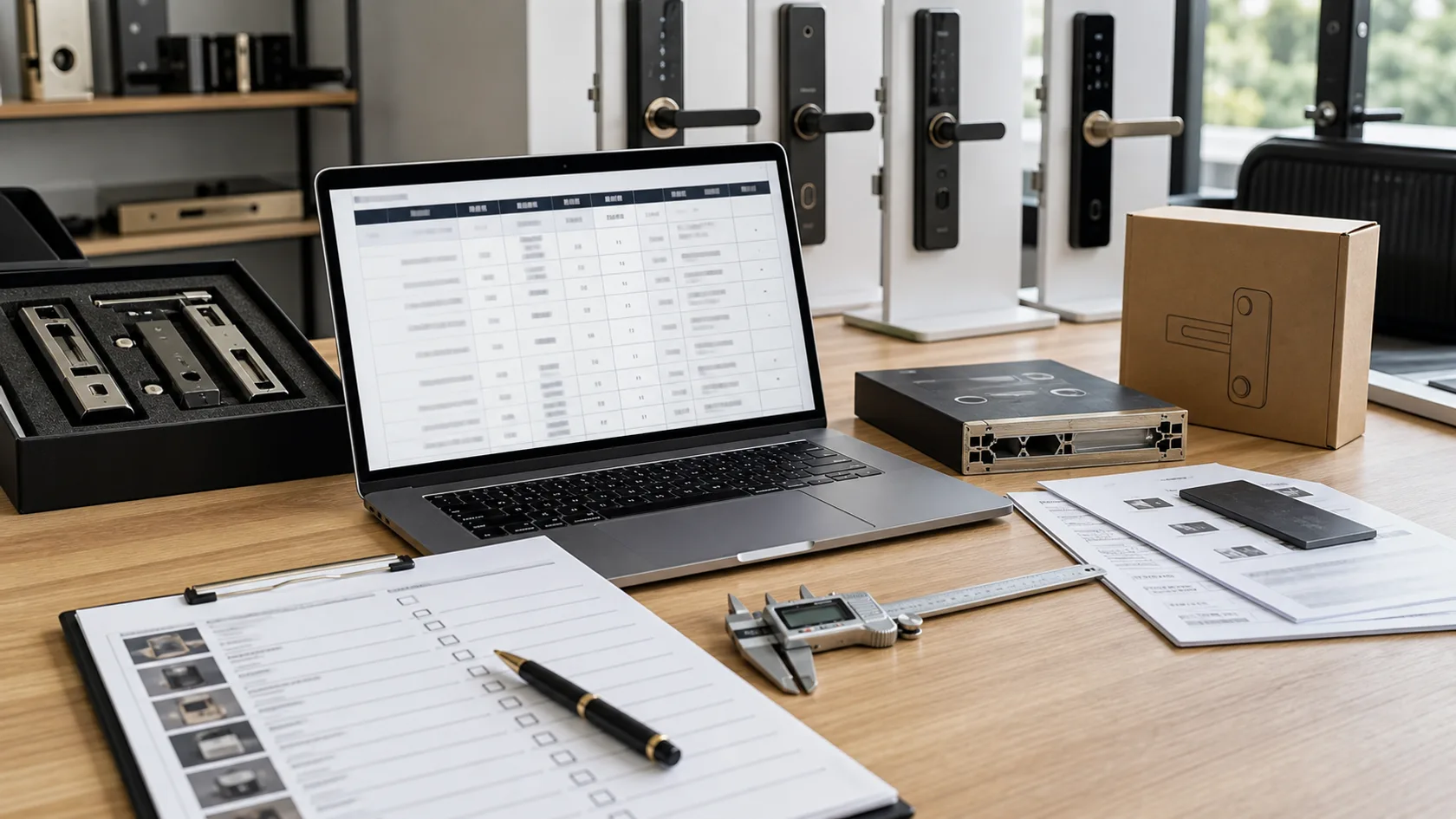
A vague RFQ usually leads to a vague smart lock quotation. If a buyer only asks for catalog and best price, the supplier may not know the target market, door type, app requirement, customization level or order plan.
A clear RFQ helps the factory recommend suitable models, separate OEM and ODM requirements, estimate MOQ and lead time, and prepare a more useful quotation. Overseas buyers can use the structure below before contacting a smart lock manufacturer.
1. Buyer and market information
Start with the basic market context. Smart lock selection depends strongly on where and how the product will be sold or installed.
- Target country or region.
- Buyer type: brand, importer, distributor, hotel buyer, apartment operator or project contractor.
- Sales channel: retail, online, wholesale, project tender or engineering procurement.
- Expected customer: homeowner, tenant, hotel guest, office user or installer.
- Any market standard or importer compliance requirement already known.
2. Door and installation details
Door compatibility is one of the biggest causes of smart lock project mistakes. Provide door details whenever available.
- Door material: wooden door, security door, aluminum door or other.
- Door thickness range.
- Lock body or mortise size if known.
- Opening direction and handle direction.
- Photos or drawings of the existing door and lock area.
- Indoor, outdoor, apartment, hotel or commercial installation environment.
3. Product and function requirements
The supplier can recommend better models when the buyer explains the required unlock methods and usage scenario.
- Preferred product type: fingerprint lock, Wi-Fi lock, Bluetooth lock, Tuya lock, TTLock lock, hotel card lock, deadbolt, lever lock or padlock.
- Unlock methods: fingerprint, passcode, card, app, mechanical key or mixed access.
- App platform: Tuya, TTLock, hotel software, model-specific app or not sure.
- Remote access requirement and gateway expectation.
- Battery type preference and emergency power requirement.
- Expected user capacity, card quantity or project room quantity if relevant.
4. OEM and ODM customization requirements
Separate simple OEM customization from deeper ODM development. This helps avoid unrealistic lead time and MOQ assumptions.
- Logo position and logo process.
- Panel color or finish preference.
- Private label packaging, manual language and labels.
- Card design, carton marks and accessory layout.
- Function selection or app option requirements.
- New appearance, mold, structure or firmware changes if ODM is needed.
5. Quantity, sample and timeline
MOQ and lead time depend on model, customization and production schedule. Buyers should separate sample needs from bulk order expectations.
- Sample quantity and preferred sample models.
- Estimated first bulk order quantity.
- Expected repeat order plan if available.
- Target sample approval date.
- Target bulk shipment date.
- Any launch date, project deadline or tender timeline.
6. Documents and quotation details to request
A useful quotation should explain more than the unit price. Ask for the included accessories, customization cost and support scope.
- Product specification sheet and available photos.
- Included accessories such as lock body, keys, cards, screws, gateway or manual.
- Sample price, bulk price and customization cost separated where possible.
- MOQ by standard model, logo, packaging or color option.
- Lead time for samples, artwork confirmation and bulk production.
- Available CE / FCC / RoHS documents depending on selected model.
- Warranty, spare parts and after-sales support scope.
Conclusion
A good smart lock RFQ should help the supplier understand the real project instead of only quoting a low price. When overseas buyers prepare market, door, function, customization, quantity and document details clearly, the quotation becomes easier to compare and the project risk becomes easier to control.
FAQ
Frequently Asked Questions
What should be included in a smart lock RFQ?
A smart lock RFQ should include target market, buyer type, door information, required unlock methods, app platform preference, customization needs, sample quantity, expected bulk quantity, timeline and document requirements.
Why do smart lock suppliers need door information?
Door information helps the supplier recommend a suitable lock body, panel type, handle direction and installation accessories. It also reduces the risk of installation mismatch after shipment.
Should buyers separate OEM and ODM requirements in an RFQ?
Yes. Simple OEM needs such as logo and packaging are different from ODM needs such as new appearance, mold, structure or firmware changes. Separating them helps suppliers estimate MOQ, cost and lead time more accurately.
Keep reading
Related Articles
Complete Guide to Smart Lock OEM & ODM in 2026
A complete buyer guide to smart lock OEM and ODM projects, including technology options, certifications, MOQ, lead time, customization and supplier selection.
Jun 22, 2026
How to Compare Smart Lock Quotations from Different Suppliers
A practical method for comparing smart lock quotes beyond unit price.
May 14, 2026
Smart Lock Manufacturer in China: What to Confirm Before Requesting a Quote
What overseas buyers should confirm before requesting a quotation from a smart lock manufacturer in China.
Jun 25, 2026
Need supplier support?
Discuss your smart lock OEM/ODM project with GwayLock
Send us your target market, door type, preferred app platform and customization needs. Our team will help you evaluate suitable models and prepare a practical quotation.
