Product Guide
Mortise vs Deadbolt Smart Locks: Door-Fit Guide
By GwayLock · Published
Understand mortise lock cases, separate smart deadbolts and existing door preparation. Compare installation formats before choosing a replacement lock.
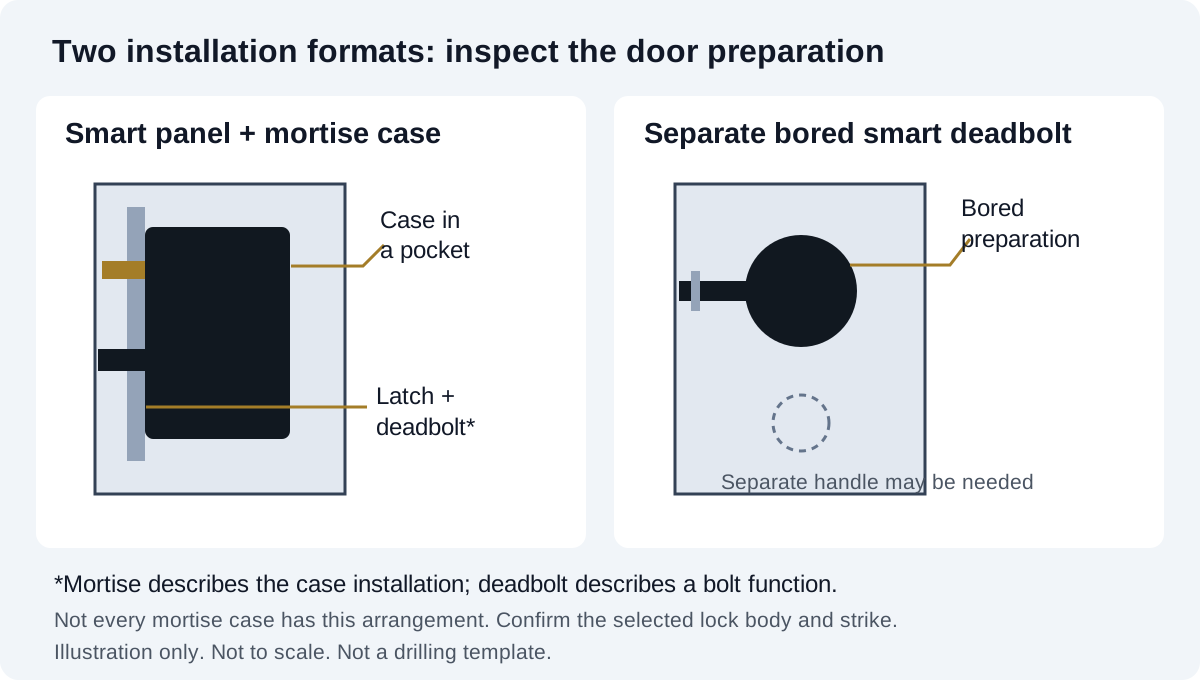
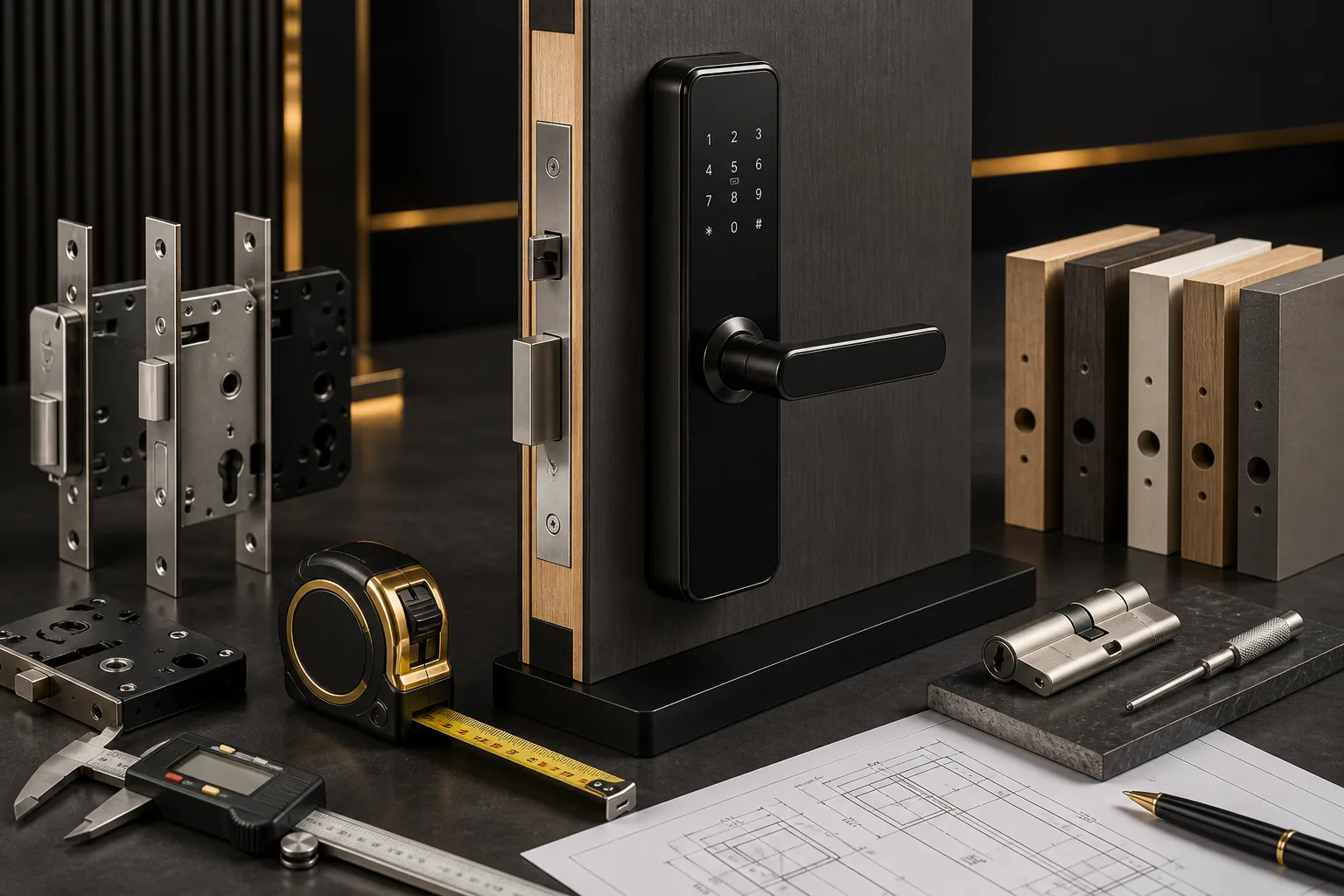
Mortise describes a lock case fitted into a pocket in the edge of a door. Deadbolt describes a type of locking bolt. They are not mutually exclusive: a mortise lock case can include both a latch and a deadbolt, as the referenced ASSA ABLOY example shows.
In smart-lock shopping, smart deadbolt often means a separate electronic deadbolt unit fitted to a bored-door preparation. This guide compares that common format with a smart panel driving a mortise case. Always identify the actual mechanism and drawing before ordering a replacement.
Look at the existing door preparation
Photograph the door edge, both door faces and the frame strike. A mortise case usually needs a rectangular pocket with a matching faceplate; a separate bored deadbolt uses a different preparation. Surface-mounted rim locks are another format and should not be treated as either example in this comparison.
Compare the dimensions that decide fit
Appearance and panel length cannot establish compatibility. Compare the manufacturer's installation template with the existing holes, pocket and frame. A replacement may require modification even when the model names or visible handles look similar.
On small screens, swipe across the table to compare all models.
| Check | Separate bored smart deadbolt | Smart panel with mortise case |
|---|---|---|
| Door preparation | Bore, edge opening and fixing pattern | Pocket, faceplate, spindle/cylinder and fixings |
| Backset | Match the specified edge-to-bore centre | Match the selected case's drawing |
| Other centres | Check any separate handle clearance | Check handle-to-cylinder and fixing centres independently |
| Frame | Bolt must align with the specified strike | Confirm latch, bolt, strike and any multipoint linkage |
| Replacement | Existing bore alone does not prove a direct swap | Existing faceplate length alone does not prove a direct swap |
Two GwayLock examples
DS01 is a compact deadbolt catalogue model. Its record lists 60 / 70 mm latch backset options, a 35–55 mm door-thickness range and four AA batteries. Confirm the exact supplied assembly and preparation drawing rather than applying those values to every deadbolt in the collection.
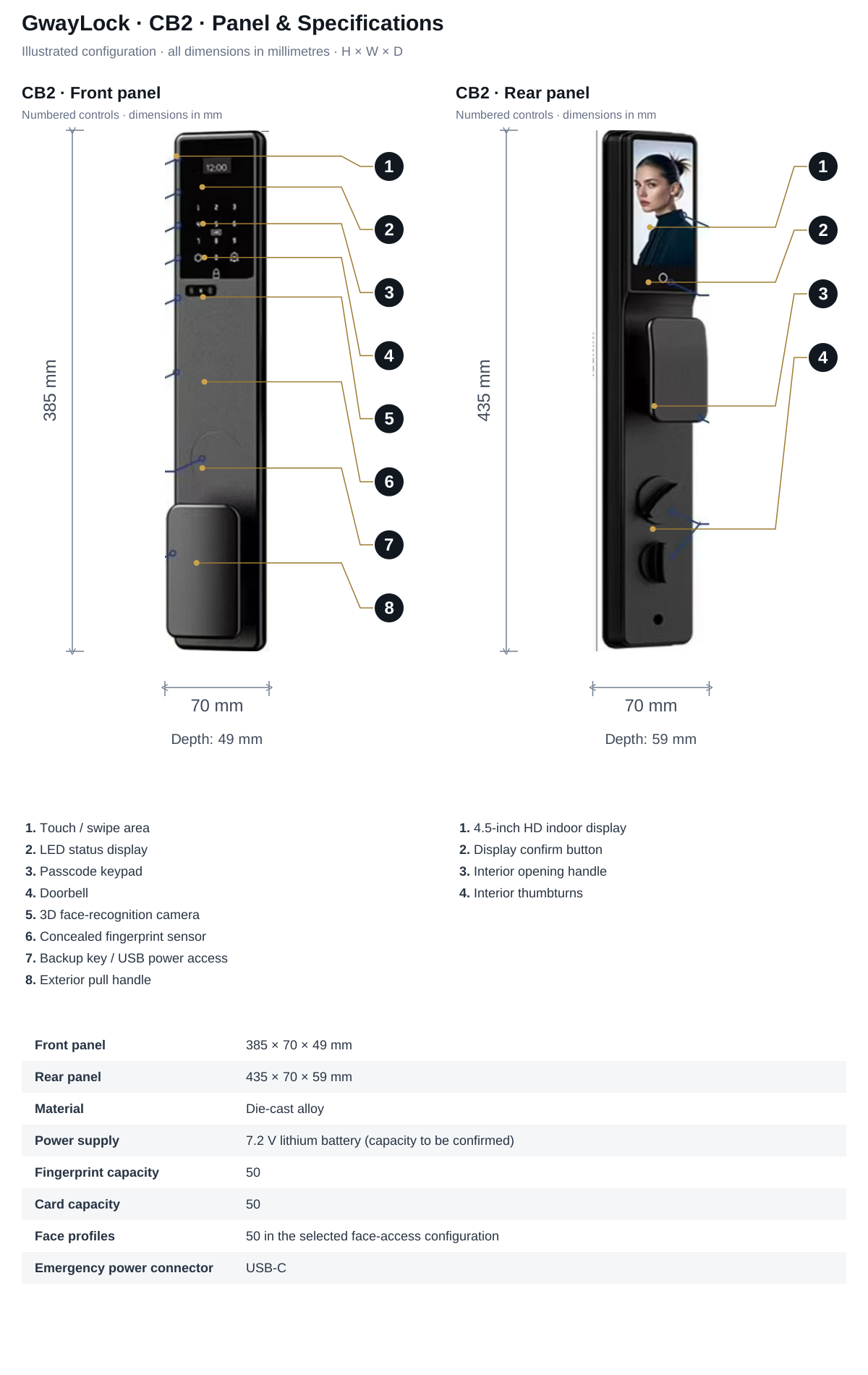
CB2 is a different outdoor fully automatic platform. Its catalogue lists several source lock-body options, including 6068 variants and other mortise labels. Those names are a shortlist for discussion, not proof that each option fits your existing door. Ask for the selected body's full drawing and included accessories.
Avoid treating a format as a security grade
A mortise format alone does not establish a security, fire, weather or durability rating; neither does a separate deadbolt format. Assess the selected hardware, door, frame, installation and model-specific documentation together. A test or certification shown for another manufacturer's example cannot be transferred to GwayLock products.
Prepare a useful door-fit request
Send the door material and thickness, edge and face photographs, existing lock drawing if available, opening direction, backset, relevant centres and the frame strike dimensions. Ask a qualified installer to review changes to the door, particularly where fire, escape or other project requirements apply.
Sources and scope
Product information follows the referenced catalogue pages. Confirm the selected configuration and installation before ordering.
External references explain general principles, test scopes or products from other manufacturers. They do not establish performance, compatibility or certification for the selected GwayLock model.
FAQ
Frequently Asked Questions
Can a mortise lock contain a deadbolt?
Yes. Mortise describes the installation of a lock case; deadbolt describes a bolt function. A mortise case can contain both a latch and a deadbolt. Compare the actual assembly and installation drawing.
Can I replace any existing lock with a smart deadbolt?
No. Check the existing preparation, selected backset, door thickness, fixing pattern, strike and handle clearance. Have the installer review any required door modification.
Explore related smart lock platforms
Review the selection guide and model specifications for each lock type before requesting samples.
Keep reading
Related Articles
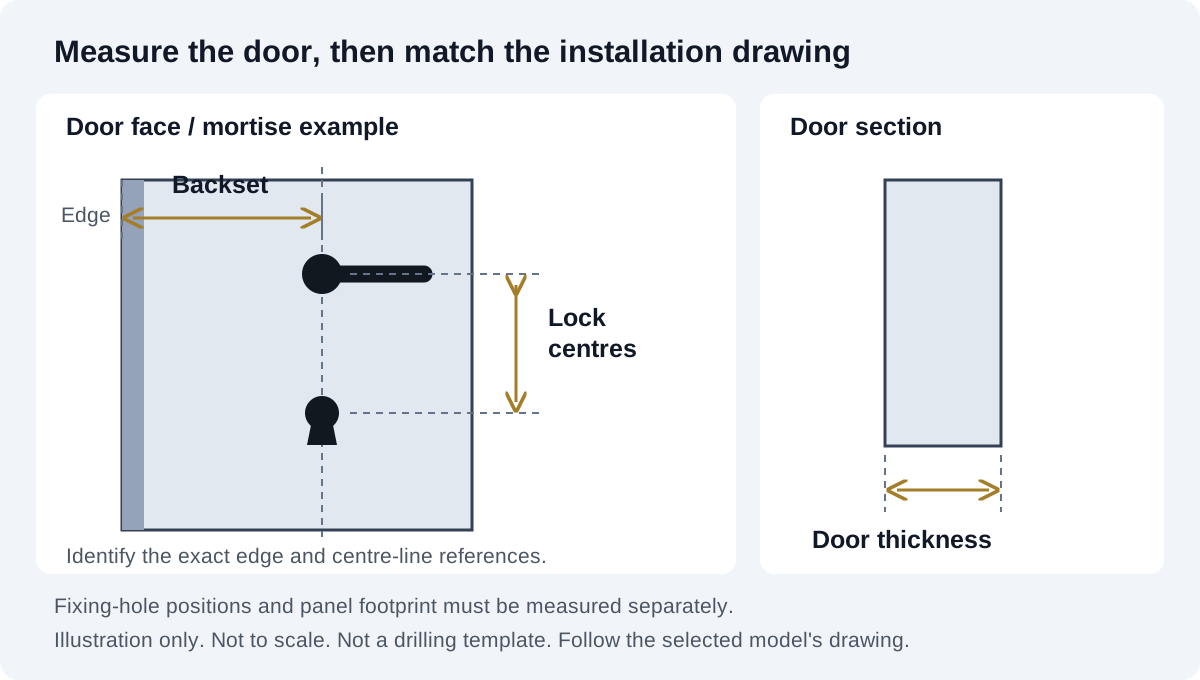
Measure a Door for a Smart Lock: Backset & Centres
Measure door thickness, backset, handle-to-cylinder centres and fixing positions separately. Use the labelled diagram and checklist before requesting a smart-lock sample.
Oct 30, 2026
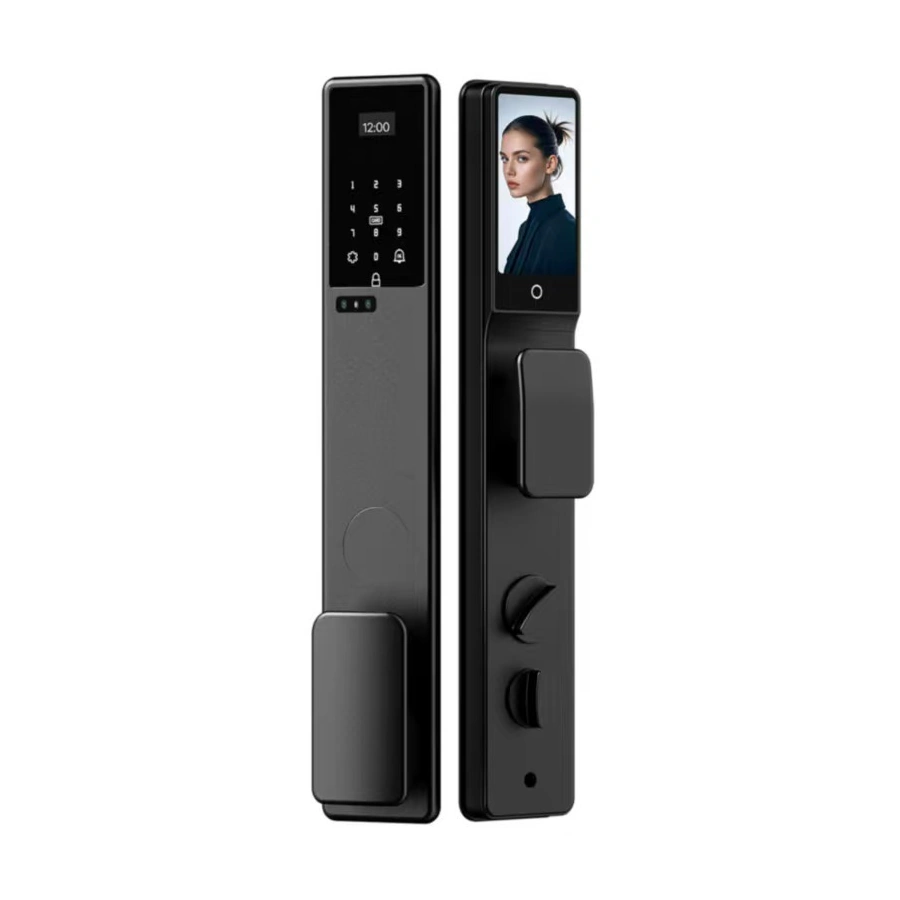
Fully Automatic vs Semi-Automatic Smart Locks
Compare motor-driven operation, user-operated handles and automatic relocking. Separate marketing labels from the actions a smart lock actually performs.
Oct 30, 2026
Smart Lock Door Compatibility Guide for Importers and Project Buyers
Compare 196, P13, P17, DS01, HP-03 and T1 door-fit requirements. Check panel dimensions, thickness, backset and mortise or rim mounting before samples.
Jun 22, 2026
Need supplier support?
Discuss your smart lock OEM/ODM project with GwayLock
Send us your target market, door type, preferred app platform and customization needs. Our team will help you evaluate suitable models and prepare a practical quotation.