Buying Guide
How to Choose a Smart Lock Manufacturer in China
By GwayLock · Published · Updated
Choose a China smart lock OEM/ODM supplier using model evidence, production responsibilities and sample checks. Compare 196, DS01 and CB1 before requesting a quote.
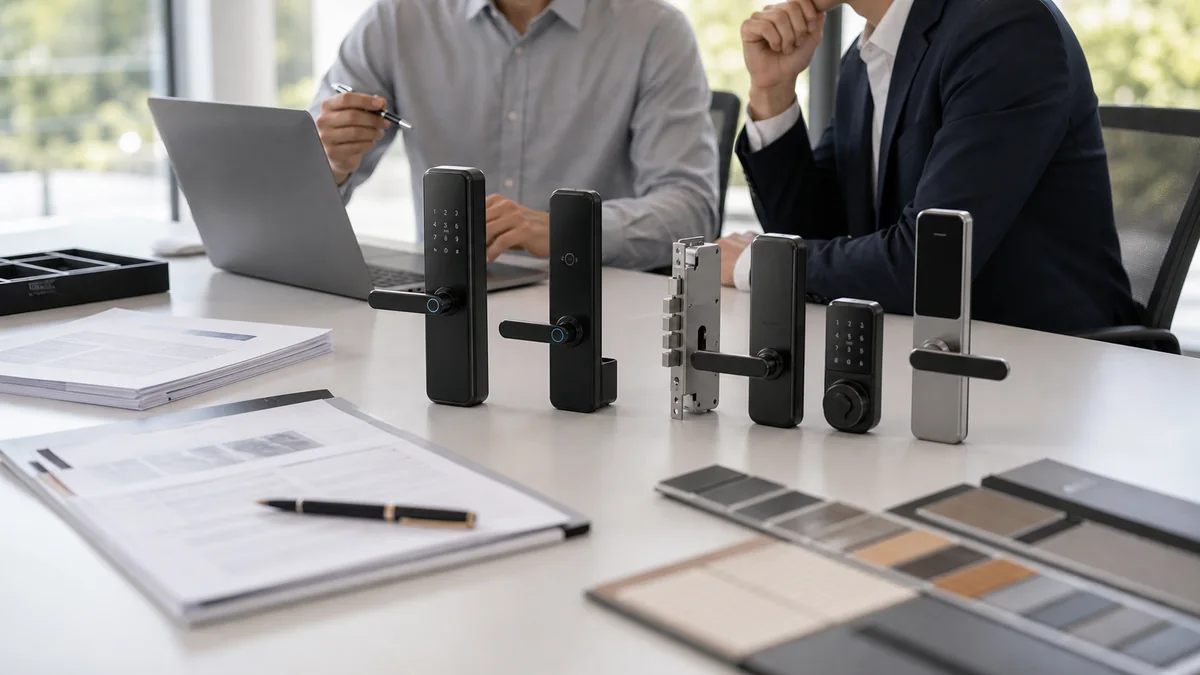
To choose a smart lock manufacturer in China, first match the supplier's actual models to your door and sales channel. Then confirm who handles product development, assembly, quality checks, branded packing and after-sales support. A large catalogue or factory photograph does not prove those responsibilities.
GwayLock supports overseas brands and project buyers from Xiaolan, Zhongshan, Guangdong, working with production partners. The examples below use the current public catalogue. They are a basis for a supplier discussion and sample plan, not proof of completed testing or one shared specification across every model.
Start with a shortlist that fits your product range
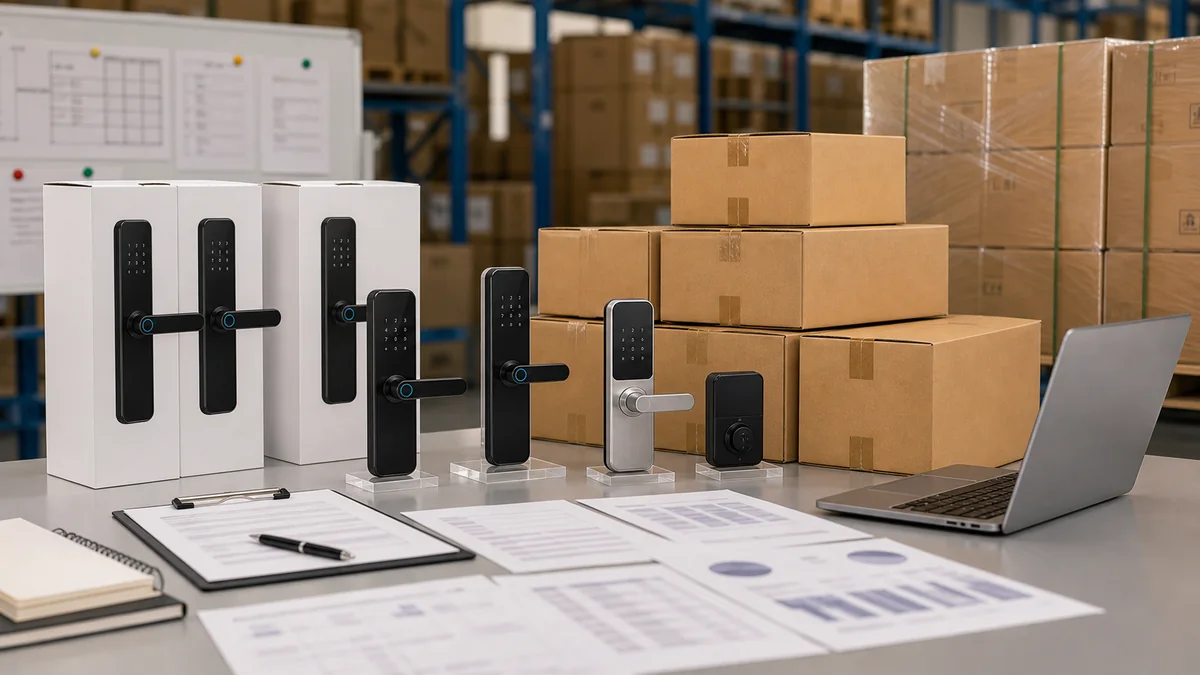
The 196, DS01 and CB1 represent a handle, a deadbolt and an outdoor fully automatic format. Compare their installation and power requirements before comparing price. A supplier's quotation should identify the chosen model, app version, included lock body and accessory set so another supplier can quote the same scope.
On small screens, swipe across the table to compare all models.
| Model | Format | Door thickness | Power | App / version labels |
|---|---|---|---|---|
| 196 | Handle | 30–50 mm | 6 V (4 × AAA alkaline batteries) | Standalone / Tuya (Bluetooth) / TTLock. Select one configuration; availability must be confirmed. |
| DS01 | Deadbolt | 35–55 mm | 6 V (4 × AA alkaline batteries) | Standalone (Wi-Fi; confirm configuration) / Tuya (Bluetooth) / TTLock / T3 configuration (confirm specification). Select one configuration; availability must be confirmed. |
| CB1 | Fully automatic | 50–100 mm | 7.2 V lithium battery (capacity to be confirmed) | Tuya / TTLock. Select one configuration; availability and functions must be confirmed. |
Ask who owns each production and support responsibility
Record the legal trading party and the team responsible for design changes, component selection, final assembly, inspection, packing and customer support. If a supplier works with partner factories, ask which processes are handled by each party and who approves the final product. Confirm how a component or firmware change will be documented against the approved sample.
- Request an installed sample with the exact lock body, battery, app version and accessories proposed for bulk supply.
- Agree an inspection checklist and evidence format: model and batch identity, observations, failed checks, corrective action and approval decision.
- Confirm which logo, packaging and manual changes use an existing platform and which require separate development, tooling or app work.
- Ask for model-specific compliance documents and verify their scope; a certificate for another housing or wireless configuration is not enough.
Prepare one clear request for quotation
Send your target country, preferred model, door material and dimensions, installation drawing, required access methods, selected app version and estimated quantity. Separate the sample price, bulk price, logo work, packaging, development charges and freight. MOQ and lead time depend on the confirmed configuration; obtain them in the actual quotation.
1. Verify the production arrangement with current evidence
Confirm which operations the supplier performs directly and which are handled by production partners. Ask for current evidence of the relevant assembly and inspection work and the person responsible for your selected model. A photograph alone does not establish ownership of a factory or responsibility for its output.
Smart locks combine mechanical parts, electronics, firmware and packaging. Evaluate the supplier's ability to investigate an installation or function issue, document a change and coordinate the responsible production team. Use a sample review and a clear written scope to assess that capability.
- Ask for factory photos or production videos.
- Check whether samples are available before bulk production.
- Ask how the factory tests lock bodies, electronics, app connection and final packaging.
- Confirm whether the supplier has experience exporting to your target market.
2. Evaluate product range and market fit
Different markets need different smart locks. Apartment projects may need password, card and app management. Retail channels may prefer fingerprint and Wi-Fi models. Hotel projects may require hotel lock software and card systems. A good supplier should help you match products to your business model instead of only sending a long catalog.
- Fingerprint smart locks for residential and retail channels.
- Wi-Fi smart locks for remote access and smart home users.
- Bluetooth and TTLock models for apartments and access management.
- Tuya smart locks for smart home ecosystems.
- Hotel smart locks for hospitality projects with card systems.
3. Confirm OEM and ODM customization capability
For brand owners and distributors, customization is often one of the most important parts of supplier selection. Basic OEM customization may include logo printing, product color, packaging design and user manual customization.
Deeper ODM projects may involve ID design, mold development, firmware adjustment, app integration or special function development. Before starting a custom smart lock project, ask the supplier what can be done immediately and what requires extra development time.
- MOQ for logo customization.
- Packaging customization cost and artwork requirements.
- Sample lead time and mass production lead time.
- Available app options such as Tuya or TTLock.
- Firmware, language and software support limitations.
4. Review quality control before shipment
Smart locks are security products, so quality control is critical. A small defect can lead to installation problems, customer complaints or after-sales cost. A reliable supplier should have a standard inspection process before shipment, including appearance inspection, function testing, aging testing, battery testing, handle testing and packaging inspection.
- Is every unit tested before packing?
- Are samples checked and approved before mass production?
- Can the supplier provide inspection photos or videos?
- What happens if defective products are found?
- Is there a warranty policy and spare parts support?
5. Check certifications and export documents
Certification requirements depend on the product model and destination market. For smart locks with electronic components, buyers often ask about CE, FCC, RoHS or other market-related documents. Buyers should be careful with broad certification claims because a certificate should match the actual model being purchased.
- Which certificates are available for this exact model?
- Can the supplier provide test reports?
- Are the documents valid for your destination market?
- Can they support commercial invoice, packing list and export documents?
6. Start with samples before bulk orders
Before placing a large order, it is better to test samples first. Samples allow you to check product quality, installation, app experience, packaging and market fit. After sample approval, you can confirm customization details and move to bulk production with lower risk.
- Test unlocking methods, fingerprint recognition, card access and app connection.
- Check battery installation, mechanical key and emergency power access.
- Install the lock on the target door type if possible.
- Review packaging, manual clarity and accessory completeness.
Sources and scope
Product information follows the referenced catalogue pages. Confirm the selected configuration and installation before ordering.
FAQ
Frequently Asked Questions
What is the most important factor when choosing a smart lock manufacturer?
For B2B buyers, the most important factor is whether the supplier can control product quality, support samples, provide clear documentation and respond to technical questions after shipment.
Should I choose a factory or a trading company?
Confirm which operations the supplier performs directly and which use production partners. Compare responsibility for the selected model, sample testing, inspection evidence, change control and after-sales support. Factory ownership alone does not establish product quality or the scope of OEM/ODM support.
Do I need samples before placing a bulk smart lock order?
Yes. Samples help you test installation, app connection, unlocking methods, packaging and overall market fit before investing in mass production.
Keep reading
Related Articles
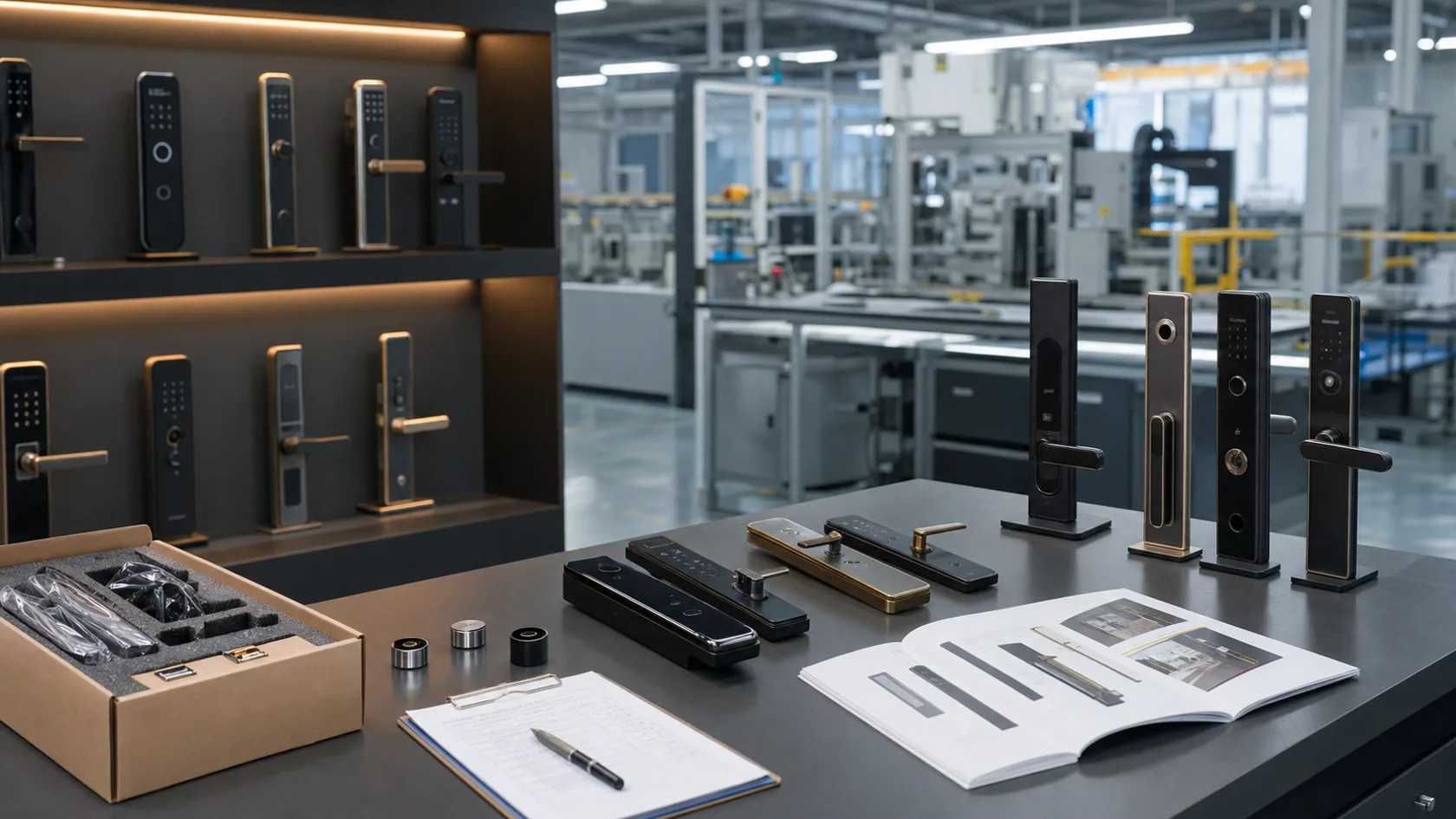
Smart Lock Manufacturer in China: What to Confirm Before Requesting a Quote
What overseas buyers should confirm before requesting a quotation from a smart lock manufacturer in China.
Jun 25, 2026
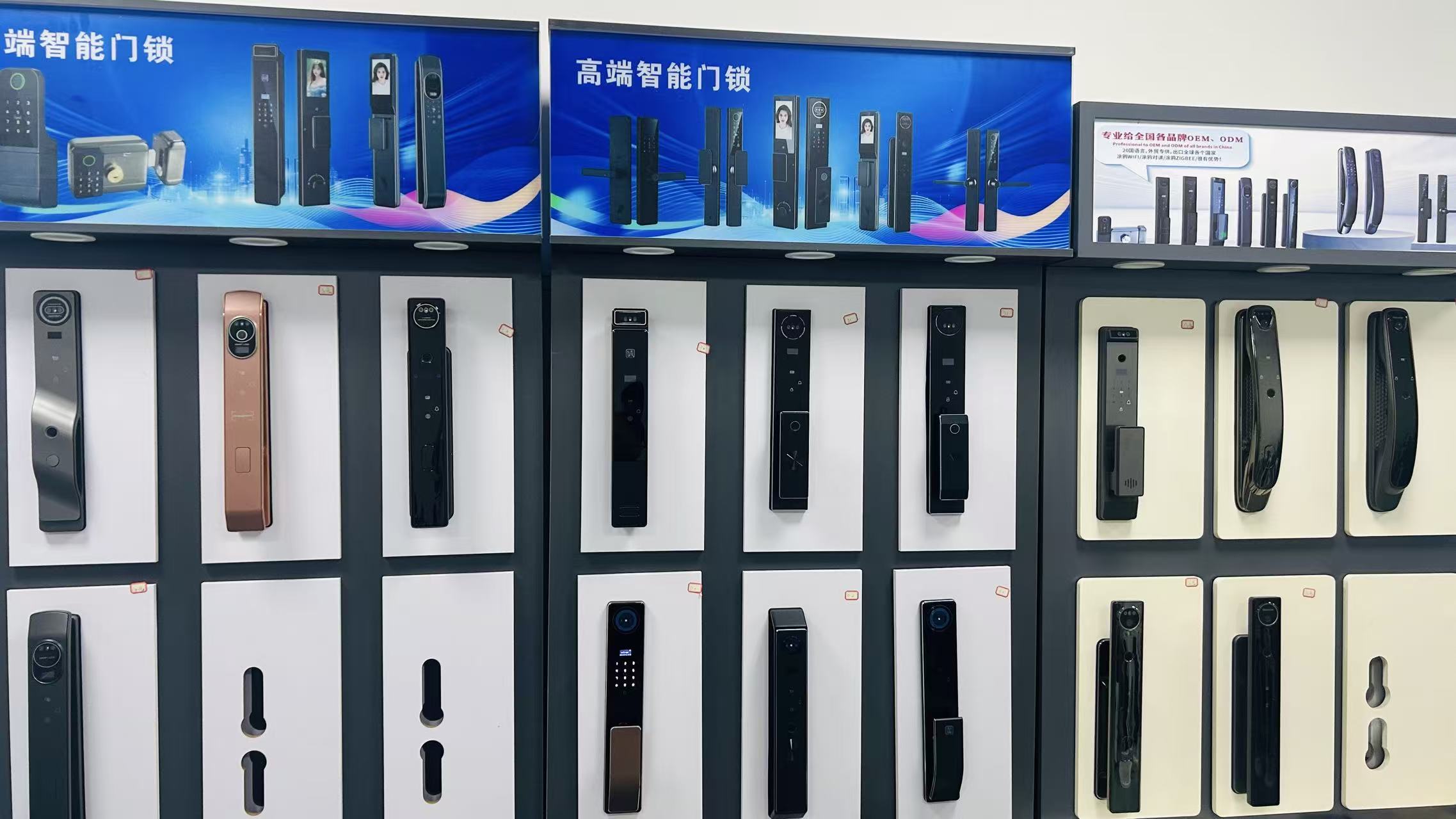
Smart Lock OEM & ODM Guide for Brands and Importers
Plan a smart lock OEM or ODM order with current model comparisons, branding scope, sample approval, QA/QC and a clear quotation record for repeat supply.
Jun 22, 2026
How to Compare Smart Lock Quotations from Different Suppliers
A practical method for comparing smart lock quotes beyond unit price.
May 14, 2026
Need supplier support?
Discuss your smart lock OEM/ODM project with GwayLock
Send us your target market, door type, preferred app platform and customization needs. Our team will help you evaluate suitable models and prepare a practical quotation.