OEM/ODM
Smart Lock OEM vs ODM: What Is the Difference?
Jun 18, 2026
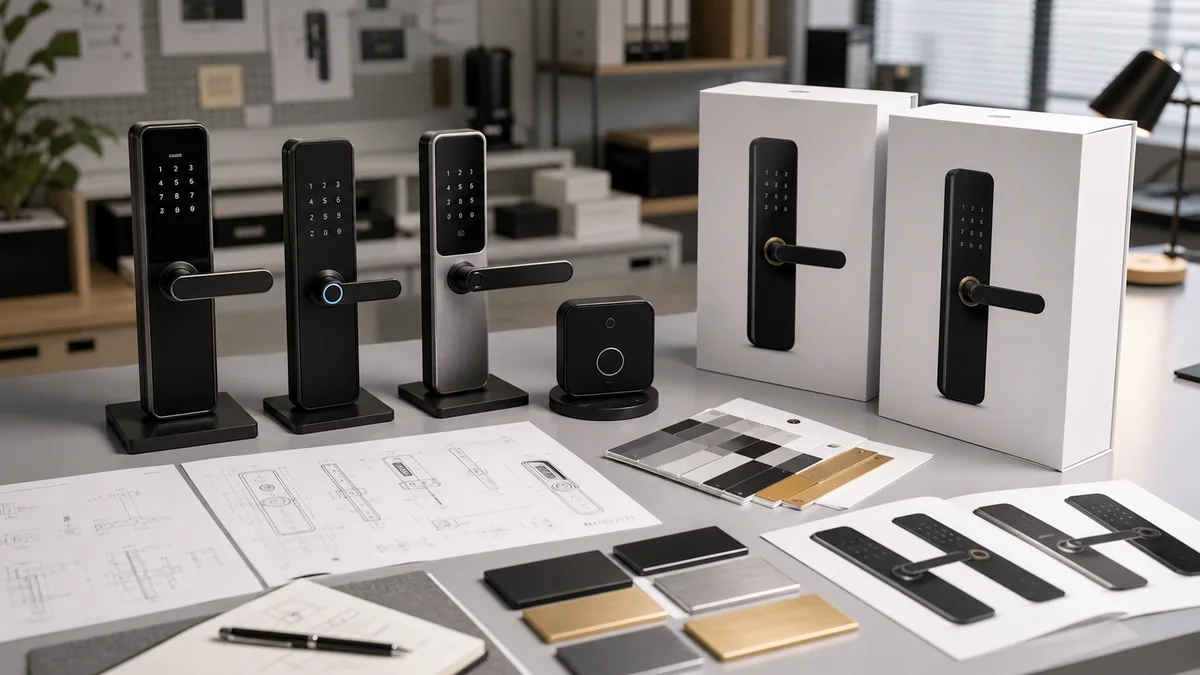
OEM and ODM are two common cooperation models in the smart lock industry. Many buyers use these words when contacting factories, but the actual scope can be very different. Understanding the difference helps you estimate cost, plan samples and avoid confusion during production.
For smart locks, the choice is especially important because the product includes mechanical parts, electronics, firmware, app ecosystems, packaging and after-sales documentation.
What is smart lock OEM?
OEM usually means using an existing smart lock platform and adapting it for your brand. The core structure, electronics and firmware are already mature. Your project focuses on branding, packaging and selected configuration options. This is usually the fastest way for distributors and brand owners to launch a product line.
- Logo printing or laser marking on the lock panel.
- Customized color box, labels and user manual.
- Selection of available models, finishes and accessories.
- App ecosystem options that the model already supports.
- Lower development risk compared with a new product design.
What is smart lock ODM?
ODM goes deeper than OEM. In an ODM project, the buyer may request a new appearance, structural adjustment, firmware change, special access function or new product concept. ODM can create stronger differentiation, but it requires clearer requirements, higher budget and longer development time.
- New ID design or customized external appearance.
- Mechanical structure changes or mold development.
- Function definition based on target users.
- Firmware or software adjustment when technically feasible.
- Longer sample, testing and validation cycle.
When OEM is the better choice
OEM is usually better when you want to test a new market, launch quickly or control the first order budget. It is also suitable when your main advantage is local sales, channel distribution, installation service or after-sales support rather than unique product design.
When ODM makes more sense
ODM makes more sense when you already understand your market and need product differentiation. For example, you may want a specific appearance for a retail brand, a special handle design for a project channel or a feature set that competitors do not offer. In this case, you should prepare clear requirements, target price and estimated order volume.
Questions to ask before choosing a model
Before deciding between OEM and ODM, ask the supplier to separate simple customization from true product development. This makes the quotation and timeline easier to understand.
- What is the MOQ for logo, packaging and color customization?
- Which parts can be changed without new tooling?
- Which requests require firmware or mold development?
- Who owns the artwork, design files or custom tooling?
- How many sample rounds are included before mass production?
Common mistakes buyers should avoid
A common mistake is asking for ODM development before the buyer has tested any standard model. This can lead to unnecessary tooling cost, long delays and unclear product direction. For a new market, it is usually better to validate demand with mature models first.
Another mistake is treating packaging customization, firmware changes and structural changes as the same level of work. In reality, packaging may be completed quickly, while firmware and mold changes require engineering review, testing and sometimes repeated sample rounds.
A practical path for new smart lock brands
For many new brands, the most practical path is to begin with OEM. Choose two or three mature models, customize logo and packaging, test samples with real users, then collect market feedback. Once sales become stable, you can consider ODM design for a second-generation product or a more differentiated product line.
Conclusion
OEM helps you launch faster with lower risk, while ODM helps you build stronger product differentiation. For many buyers, the best path is to start with OEM samples, collect market feedback and then move into deeper ODM work once the product direction is proven.
FAQ
Frequently Asked Questions
Is OEM or ODM better for a new smart lock brand?
OEM is usually better for a new brand because it starts from mature models, lowers development risk and helps you test the market faster.
When should I consider ODM development?
ODM makes sense when you already understand your market, have stable demand and need a unique appearance, structure or function that standard models cannot provide.
Does ODM always require a higher MOQ?
In most cases, yes. ODM may involve engineering work, tooling, firmware changes and extra testing, so suppliers usually require higher order quantities.
Keep reading
Related Articles
Complete Guide to Smart Lock OEM & ODM in 2026
A complete buyer guide to smart lock OEM and ODM projects, including technology options, certifications, MOQ, lead time, customization and supplier selection.
Jun 22, 2026
Private Label Smart Locks: How to Start Your Own Brand
A practical guide for distributors and sellers planning to launch a private label smart lock brand.
May 10, 2026
What Can Be Customized for a Smart Lock Brand?
Learn which smart lock elements can be customized for private label, OEM and ODM brand projects.
Jun 10, 2026
Need supplier support?
Discuss your smart lock OEM/ODM project with GwayLock
Send us your target market, door type, preferred app platform and customization needs. Our team will help you evaluate suitable models and prepare a practical quotation.
